Q: What are AI Evals?
AI evals are tests that tell you whether an AI system is doing what you want. They give your team feedback when the product drifts from user needs or business goals. The failures they catch also become data you can use to improve the system.
More formally, evaluation is the systematic measurement of quality. Each eval checks one behavior on relevant examples and returns a score or structured review. Most AI products need several evals because they can fail in different ways.
When you hear the word “evals,” it usually refers to one of two things: model benchmarks or product evals.
Model benchmarks
Model benchmarks compare general-purpose models on shared tasks. Model providers publish these benchmark results when they release new models. Common examples include GPQA Diamond for graduate-level science reasoning, Terminal-Bench for agents doing complex work in command-line environments, and MMLU for knowledge and reasoning across a wide range of subjects. These scores can help you choose a promising model as a starting point. To assess quality on your own tasks you need product evals, which we discuss next.
Product evals
Product evals measure whether your specific AI product does what you want it to do. They turn your judgment about what a good product experience looks like into metrics you can track. Product evals encompass all components of your product, including the model, prompts, retrieval, tools, and application code. This flavor of evals are focused on capturing failures that matter to users and the business.
Consider an order-cancellation agent. Its product evals might check whether it selected the correct order and waited for the cancellation tool to succeed before telling the user the order was canceled. A high score on GPQA Diamond or Terminal-Bench gives you little information on this, because those benchmarks don’t have access to your systems.
There are several mechanisms you can use to implement product evals, including code assertions, human review, LLM judges, and online experiments. The right method depends on the failure being measured, and is discussed in greater detail in this series.
In the rest of the AI Evals FAQ, we focus on product evals. It starts with analyzing traces to discover real failure modes. We then turn important failures into targeted evals and use the results to guide changes. Finally, rerunning the evals tells us whether the system improved.
Where to start with evals
If you are completely new to product-specific evals, see these posts:
| Guide | What it covers | |
|---|---|---|
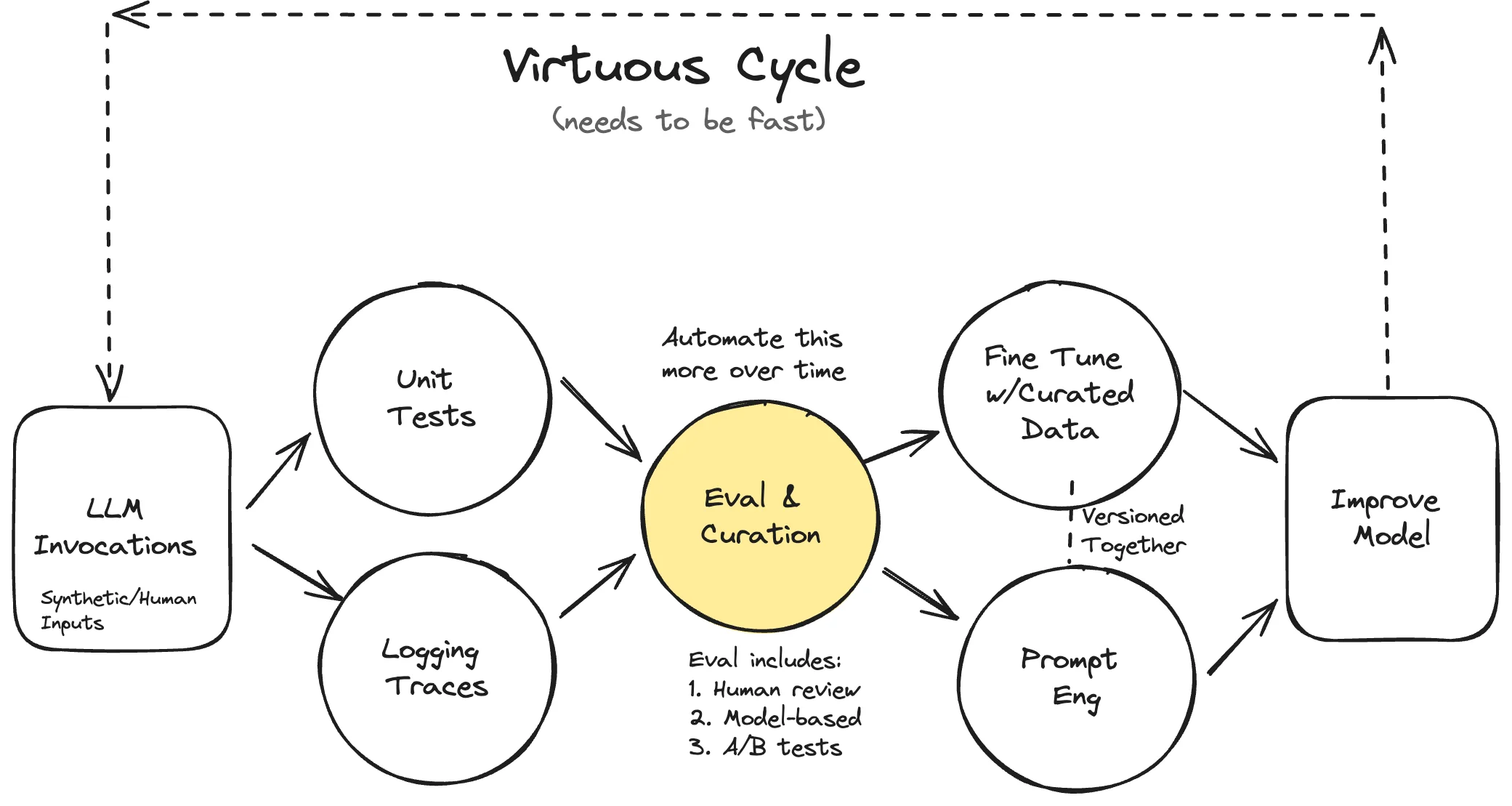 |
Part 1: Your AI Product Needs Evals | Build a domain-specific evaluation system with scoped tests, trace review, human evaluation, and experiments. |
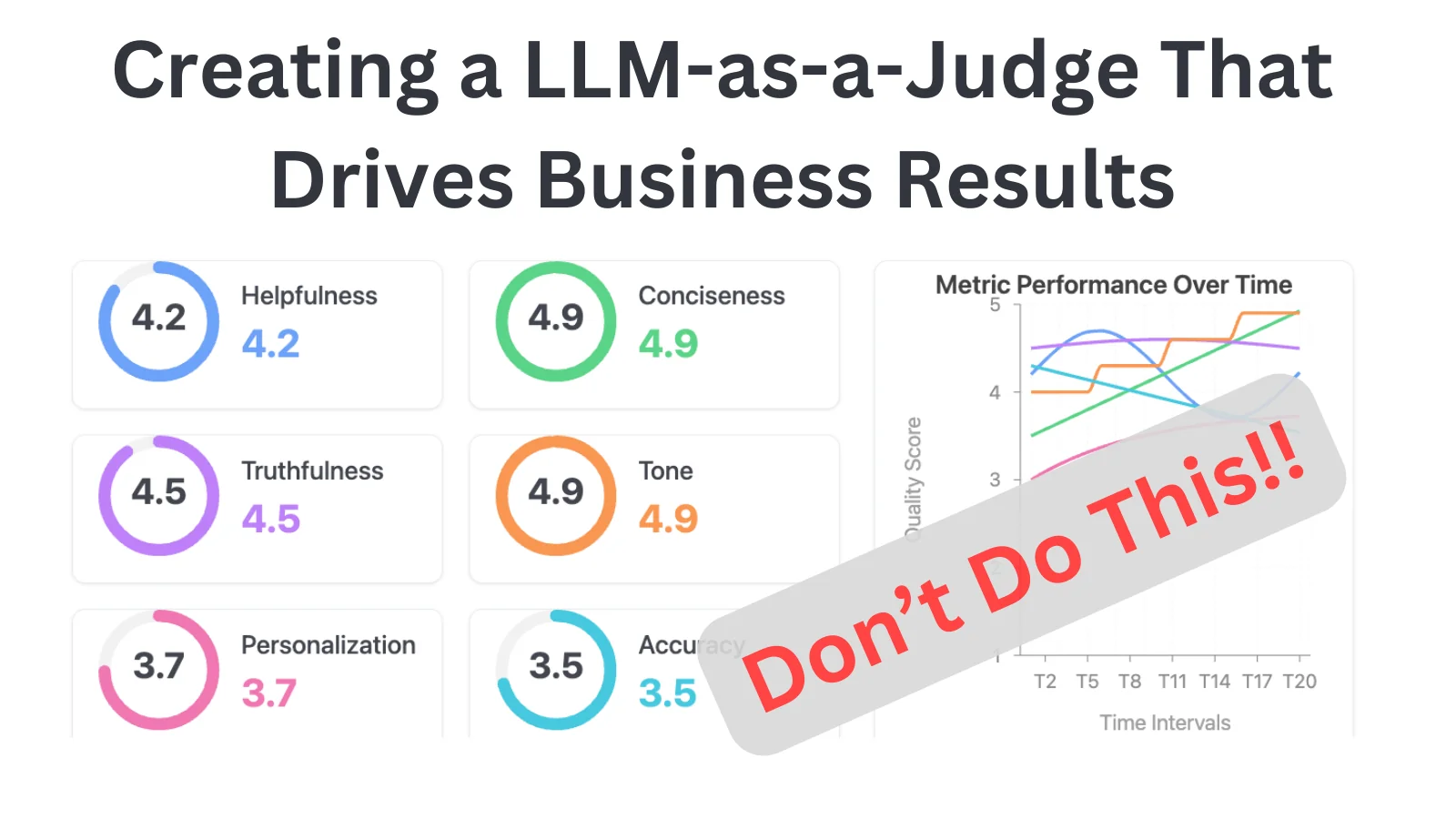 |
Part 2: Using LLM-as-a-Judge For Evaluation: A Complete Guide | Capture a domain expert’s judgment, automate it with an LLM judge, and validate the judge against human labels. |
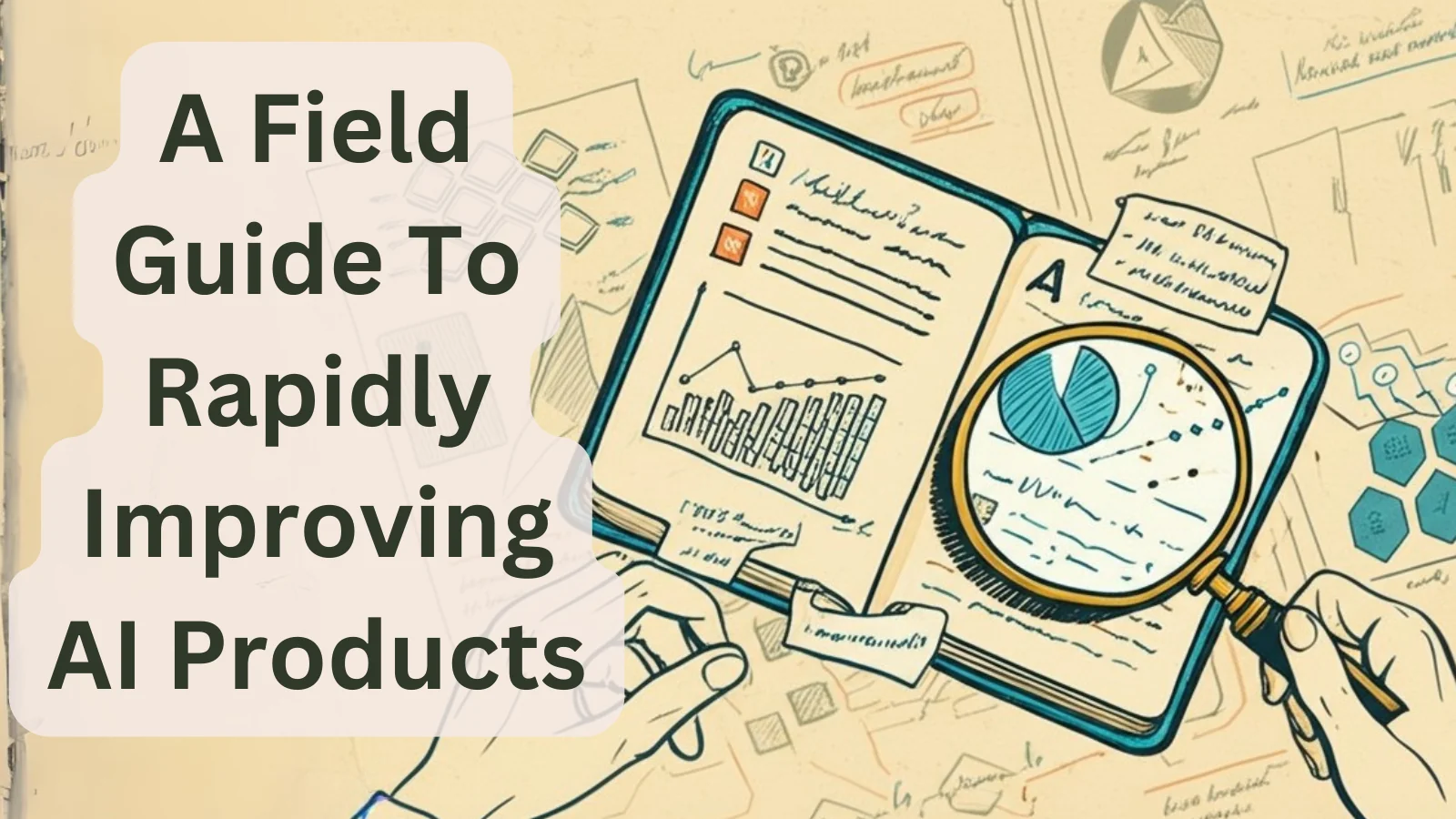 |
Part 3: A Field Guide to Rapidly Improving AI Products | Use error analysis, realistic data, and trustworthy evals to run a sustained product-improvement loop. |
This article is part of our AI Evals FAQ, a collection of common questions (and answers) about LLM evaluation. View all FAQs or return to the homepage.